

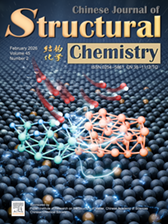
Cover Picture
MOF derived Co–Mo2C heterojunctions with interfacial electronic modulation for oxygen reduction reaction and zinc-air batteries
Desheng Li#, Qin Li#, Peng Xu, Xingyu Guo, Heng Wu, Rui Liu*, Fei Tan* Submit a Manuscript
MOF derived Co–Mo2C heterojunctions with interfacial electronic modulation for oxygen reduction reaction and zinc-air batteries
Desheng Li#, Qin Li#, Peng Xu, Xingyu Guo, Heng Wu, Rui Liu*, Fei Tan* Submit a Manuscript
Unidimensional heterostructured LSCF-GDC nanofiber film as oxygen electrode for efficient solid oxide cell
Weilin Kong#, Man Lian#, Tong Sheng, Yarui Wang, Lu Zou*, Kaisheng Xia, Jian Pu, Bo Chi, Yunfeng Tian*
Chin. J. Struct. Chem., 2026, 45(2), 100770. DOI: 10.1016/j.cjsc.2025.100770
February 1, 2026
LSCF-GDC nanofiber film; Oxygen electrode; Heterointerface; Current polarization; Solid oxide cells
ABSTRACT
Nanofibers hold great promise as oxygen electrode materials in solid oxide cells (SOCs). However, conventional fabrication methods—such as slurry processing and high-temperature sintering—inevitably disrupt their delicate nano-architectures. Here, we propose an innovative self-assembly strategy mediated by current polarization to construct La0.6Sr0.4Co0.2Fe0.8O3-δ-Gd0.1Ce0.9O2-δ (LSCF-GDC) nanofiber composite film electrodes. This approach largely preserves the fibrous morphology while promoting coherent heterointerfaces, abundant active sites, and efficient electron/ion pathways. Benefiting from this tailored architecture, the electrode achieves a low polarization resistance of 0.117 Ω cm2 and a peak power density of 1.482 W cm-2 at 800 °C. Moreover, in CO2 electrolysis mode, it delivers an impressive current density of 2.30 A cm-2 at 1.8 V. These results establish nanofiber heterostructure films, enabled by current polarization assembly, as a powerful strategy to simultaneously enhance activity, durability, and mass transport, offering new opportunities for high-performance intermediate-temperature SOCs.





- Address: Fuzhou High & New Technology Industrial Zone, Shangjie, Minhou, Fuzhou, Fujian 350108, China
- Tel: (86)-591-63173769, 63173770
- E-mail: cjsc@fjirsm.ac.cn
CN 35–1112/TQ, ISSN 0254–5861, Online ISSN: 2949-768X Copyright @ 2022 Chinese Journal of Structural Chemistry-www.Chinese Journal of Structural Chemistry.net. All Rights Reserved 闽ICP备2022002645号-1