

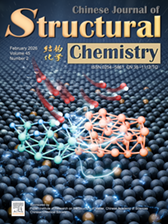
Cover Picture
MOF derived Co–Mo2C heterojunctions with interfacial electronic modulation for oxygen reduction reaction and zinc-air batteries
Desheng Li#, Qin Li#, Peng Xu, Xingyu Guo, Heng Wu, Rui Liu*, Fei Tan* Submit a Manuscript
MOF derived Co–Mo2C heterojunctions with interfacial electronic modulation for oxygen reduction reaction and zinc-air batteries
Desheng Li#, Qin Li#, Peng Xu, Xingyu Guo, Heng Wu, Rui Liu*, Fei Tan* Submit a Manuscript
The potential of diatomic-site catalysts for CO2 photoreduction to multi-carbon products
Baker Rhimi, Zheyang Liu, Jing Li*, Min Zhou*, Qiang Ma, Zhifeng Jiang*
Chin. J. Struct. Chem., 2026, 45(2), 100791. DOI: 10.1016/j.cjsc.2025.100791
February 1, 2026
Photocatalytic CO2 reduction; Multi-carbon products; Diatomic-site catalysts; Defect engineering; Bimetallic synergy
ABSTRACT
Diatomic-site catalysts (DACs) have recently emerged as highly promising platforms for photocatalytic CO2 reduction, offering unique opportunities to control reaction thermodynamics and kinetics for selective C2+ product formation. By integrating two adjacent metal centers within well-defined architectures, DACs enable synergistic activation of CO2 and stabilization of key C–C coupling intermediates, surpassing the limitations of single-atom or bulk catalysts. This perspective highlights the recent advances in DAC synthesis strategies, characterization techniques, mechanistic insights into multi-carbon formation, and the fundamental reasons why DACs facilitate C–C bond formation with high selectivity. A critical discussion is presented on the mechanism of C2+ formation on these unique active sites. Furthermore, the role of defect engineering within the catalyst support or surrounding matrix in modulating the electronic structure and stability of DACs, is thoroughly examined. Finally, this perspective outlines future research directions to further unlock the full potential of DACs for efficient and selective photocatalytic CO2 reduction to C2+ products.





- Address: Fuzhou High & New Technology Industrial Zone, Shangjie, Minhou, Fuzhou, Fujian 350108, China
- Tel: (86)-591-63173769, 63173770
- E-mail: cjsc@fjirsm.ac.cn
CN 35–1112/TQ, ISSN 0254–5861, Online ISSN: 2949-768X Copyright @ 2022 Chinese Journal of Structural Chemistry-www.Chinese Journal of Structural Chemistry.net. All Rights Reserved 闽ICP备2022002645号-1