

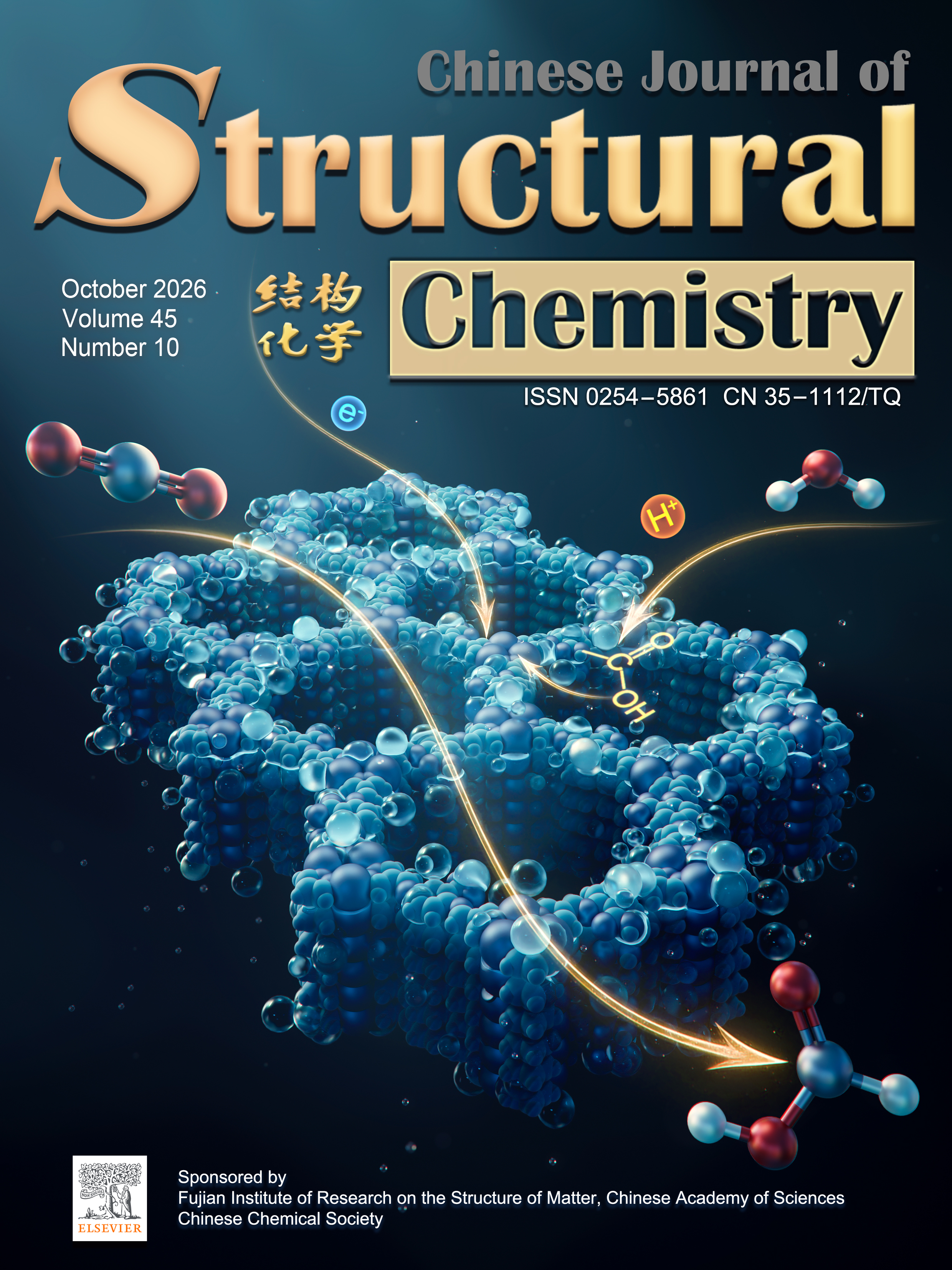
Cover Picture
Strengthening hydrophilicity in covalent-organic frameworks to boost CO2 photoreduction
Si-Zhan Feng†, Chong-Jiu Lu†, Ji-Hua Deng*, Tong-Bu Lu, Di-Chang Zhong* Submit a Manuscript
Strengthening hydrophilicity in covalent-organic frameworks to boost CO2 photoreduction
Si-Zhan Feng†, Chong-Jiu Lu†, Ji-Hua Deng*, Tong-Bu Lu, Di-Chang Zhong* Submit a Manuscript
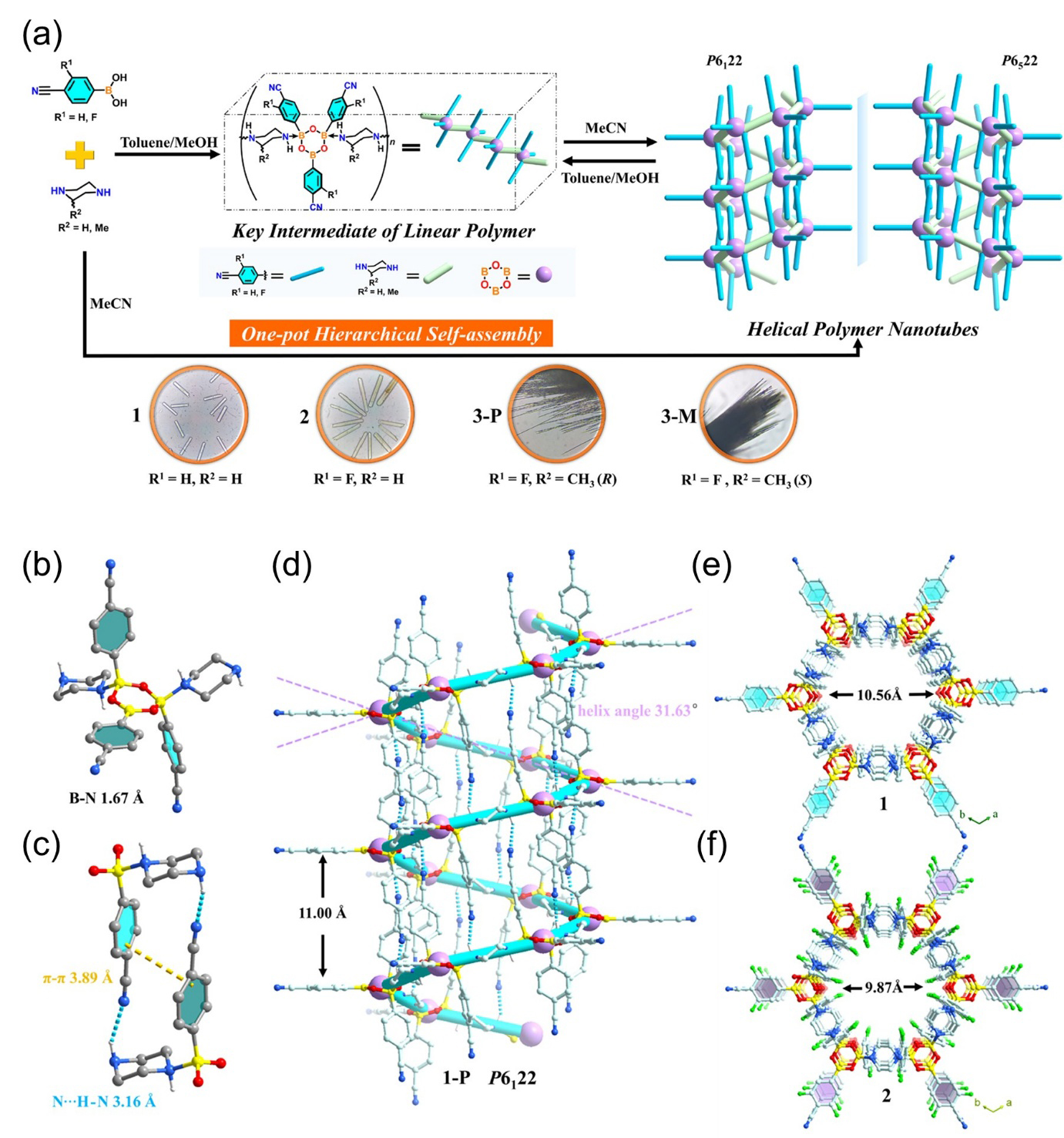
Folding codes in crystalline organic nanotubes: Toward synthetic cytoskeletons
Yujuan Zhuo, Xi Fan*, Zhangjing Zhang*
Chin. J. Struct. Chem., 2026, 45(10), 100986. DOI: 10.1016/j.cjsc.2026.100986
October 1, 2026
ABSTRACT
Looking forward, a promising direction for this system may lie in engineering synthetic cytoskeleton-like scaffolds for protocells. Should dynamic linkages and noncovalent codes prove amenable to stimuli-responsive control, such nanotubes could potentially serve as reconfigurable frameworks within confined soft-matter environments (e.g., vesicles), which might one day enable oriented transport, spatial segregation, and the organization of reaction networks. In this sense, single-crystal polymer nanotubes offer not only critical structural insight but also a design logic that could inform the development of adaptive, life-mimetic architectures.




- Address: Fuzhou High & New Technology Industrial Zone, Shangjie, Minhou, Fuzhou, Fujian 350108, China
- Tel: (86)-591-63173769, 63173770
- E-mail: cjsc@fjirsm.ac.cn
CN 35–1112/TQ, ISSN 0254–5861, Online ISSN: 2949-768X Copyright @ 2022 Chinese Journal of Structural Chemistry-www.Chinese Journal of Structural Chemistry.net. All Rights Reserved 闽ICP备2022002645号-1