


Cover Picture
Nuclear magnetic resonance-guided Monte Carlo/molecular dynamics structure inference for amorphous solids
Kangren Kong, Zaiqiang Ma, Yu Yin, Zhaoming Liu, Ruikang Tang* Submit a Manuscript
Nuclear magnetic resonance-guided Monte Carlo/molecular dynamics structure inference for amorphous solids
Kangren Kong, Zaiqiang Ma, Yu Yin, Zhaoming Liu, Ruikang Tang* Submit a Manuscript
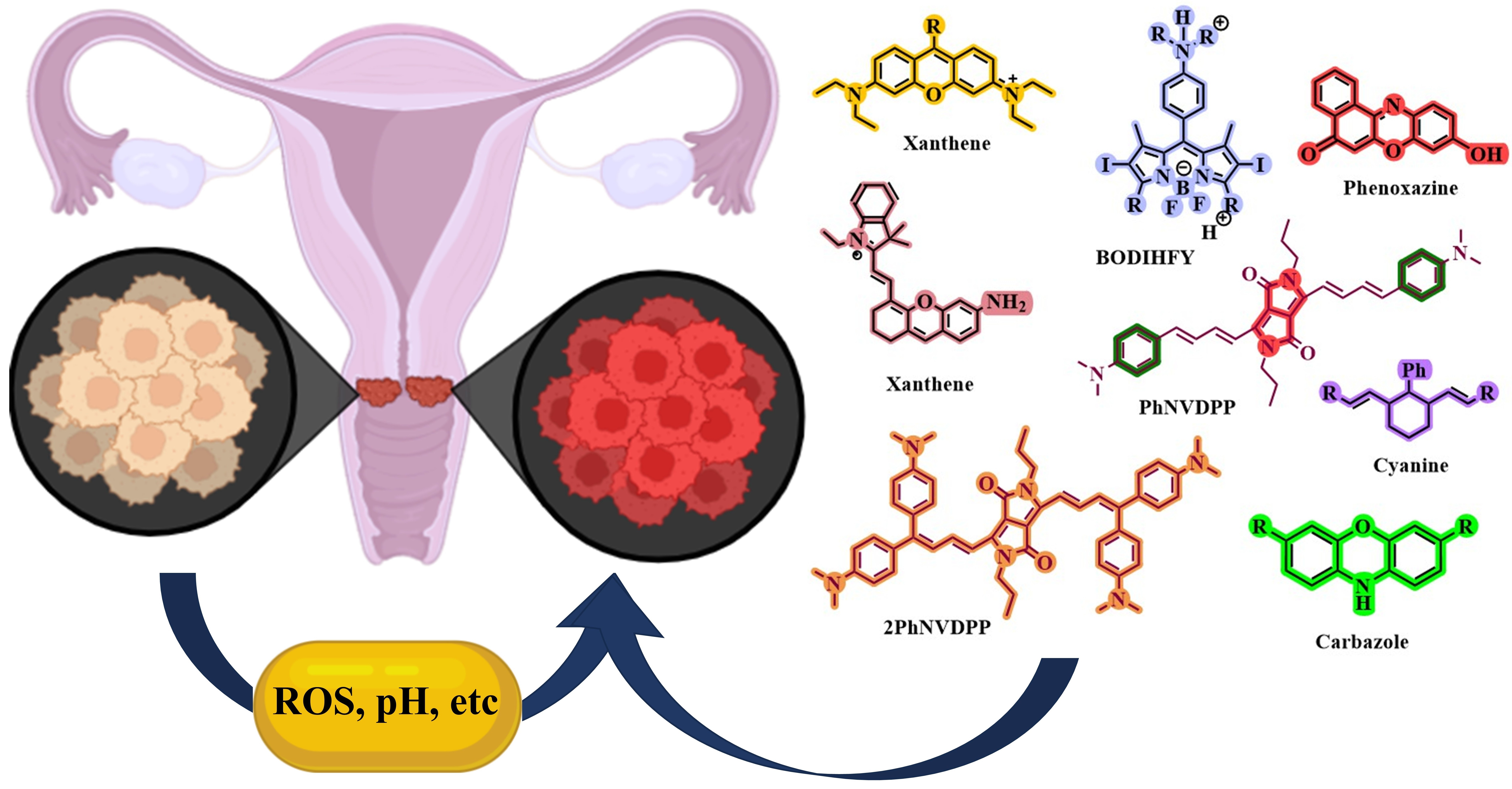
Cervical cancer imaging with organic small molecule NIR fluorophores: Design strategies and biomedical applications
Pachaiyappan Murugan*, Fang Yang, Loganathan Praburaman, Vijayapoopathi Singaravel, Meivelu Moovendhan, Chitrarasu Manikandan, Shi-Yong Liu*
Chin. J. Struct. Chem., 2026, 45(3), 100813. DOI: 10.1016/j.cjsc.2025.100813
March 1, 2026
Cervical cancer Targeted HeLa cell imaging; Organic small-molecule; NIR fluorescent probes I & II; Activatable fluorescent probes; Multimodal imaging; Dual-locked probes
ABSTRACT
Organic near-infrared (NIR) fluorophores are being considered as next-gen tools for targeted imaging of HeLa cells and cervical cancer because they have less phototoxicity, less background autofluorescence, and better tissue penetration than traditional fluorophores. Through this review article, we have discussed how recent developments in rational molecular engineering have resulted in probes that are more attuned to particular tumor microenvironmental signals as viscosity, pH, reactive oxygen species, and enzyme overexpression. These probes are brighter, have larger Stokes shifts, and can be tuned through techniques like π-extension, donor-acceptor frameworks, heteroatom incorporation, and aggregation-induced emission algorithms. Potential platforms for image-guided therapy in cervical malignancies include BODIPY, carbazole, phenothiazine/phenoxazine, phenyl derivatives, and rhodamine/xanthene analogues. Early diagnosis, surgical guiding, and theranostic applications are just a few of the many uses for these platforms. Efforts within the scientific community to enhance clinical accuracy should focus on three key areas: (1) expanding the NIR-II window for fluorophore emission to improve tissue penetration and signal quality; (2) developing activatable probes specific to organelles; and (3) integrating these systems with cutting-edge optical imaging tools analysis. Nevertheless, there are still challenges to be solved, including issues with photostability, synthesis complexity, nonspecific interactions, water solubility, and gaps in the translation of results from preclinical models to human applications. These limitations must be overcome through systematic evaluation, scalable synthesis, and thorough safety profiling if organic NIR probes for imaging and treatment of cervical cancer can be quickly brought into clinical uses.




- Address: Fuzhou High & New Technology Industrial Zone, Shangjie, Minhou, Fuzhou, Fujian 350108, China
- Tel: (86)-591-63173769, 63173770
- E-mail: cjsc@fjirsm.ac.cn
CN 35–1112/TQ, ISSN 0254–5861, Online ISSN: 2949-768X Copyright @ 2022 Chinese Journal of Structural Chemistry-www.Chinese Journal of Structural Chemistry.net. All Rights Reserved 闽ICP备2022002645号-1