


Cover Picture
Ligand functionalization boosts circularly polarized luminescence in chiral MOFs
Zhi-Wen Wang, Xiuzhen Wang, Yi-An Chen, Hong-Rui Zheng, Yu-Peng Han, Fei Wang*, Shumei Chen*, Shangda Li*, Jian Zhang Submit a Manuscript
Ligand functionalization boosts circularly polarized luminescence in chiral MOFs
Zhi-Wen Wang, Xiuzhen Wang, Yi-An Chen, Hong-Rui Zheng, Yu-Peng Han, Fei Wang*, Shumei Chen*, Shangda Li*, Jian Zhang Submit a Manuscript
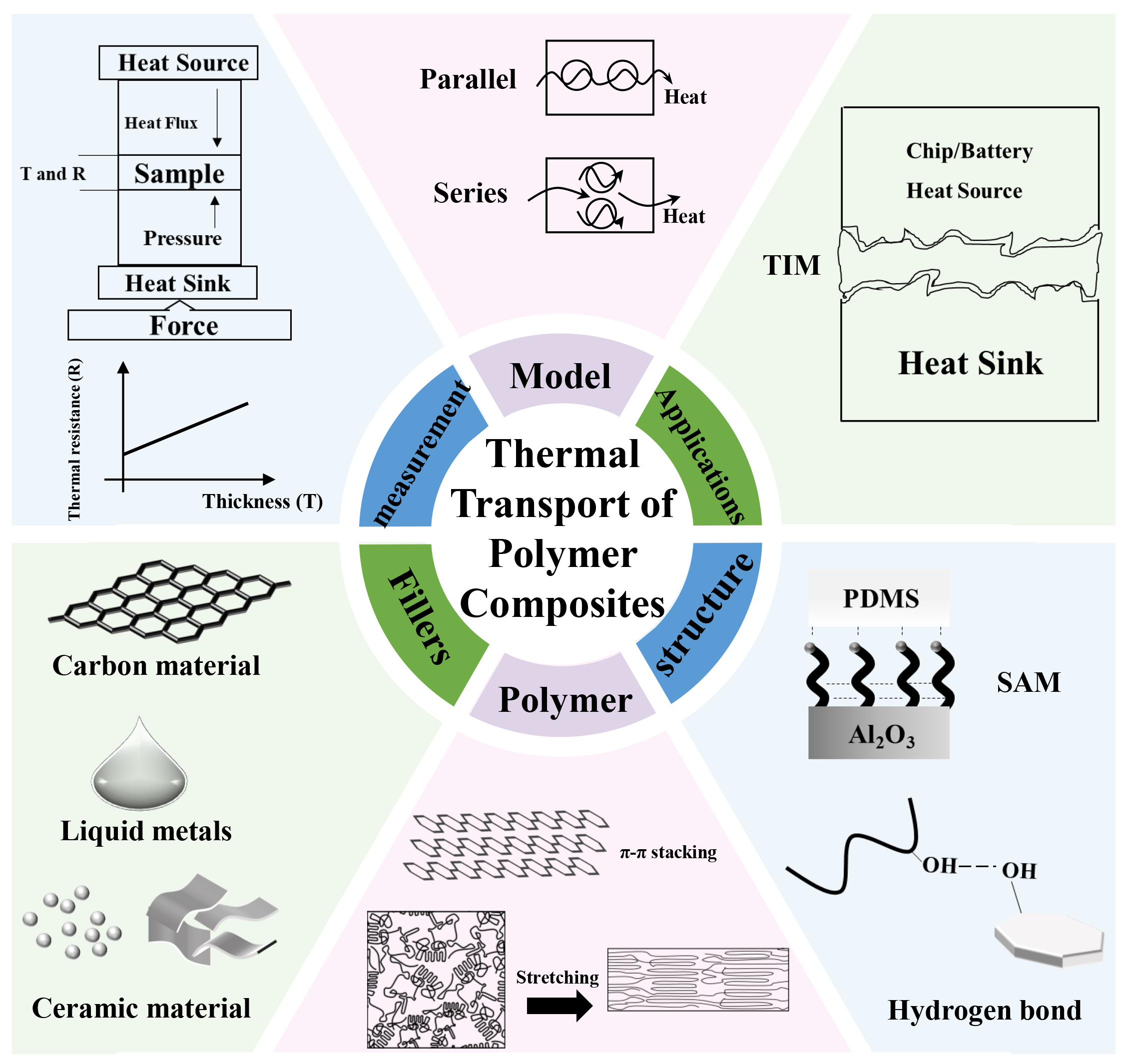
Structure-thermal transport relationships in polymers-based composites: Models, metrology, and microstructure control
Munshi Jasimuddin, Zhijie Wang, Jiajing Huang*, Jiawang Wen*, Yue Lin*
Chin. J. Struct. Chem., 2026, 45(6), 100909. DOI: 10.1016/j.cjsc.2026.100909
June 1, 2026
Thermally conductive polymer composites; Thermal conductivity; Structure-property relationships; Thermal metrology; Microstructure design; Thermal interface materials (TIMs)
ABSTRACT
Polymers are indispensable in modern technologies because of their lightweight nature, processability, and mechanical compliance, yet their inherently low thermal conductivity limits thermal management in applications ranging from flexible electronics and energy devices to thermal interfaces. Recent progress shows that polymer thermal transport is highly designable when viewed through a hierarchical structure–property framework that spans molecular order, mesoscale morphology, and composite architectures. This review summarizes advances in thermally conductive polymers and polymer-based composites by connecting multiscale modelling, reliable metrology, and microstructure engineering. We first discuss theoretical and computational approaches that capture phonon-dominated transport in disordered chains and quantify interfacial thermal resistance at polymer–filler interphases. We then compare key measurement techniques and highlight how test configuration, pressure, anisotropy, and sample preparation affect the extracted thermal conductivity and thermal resistance metrics. We further analyze material strategies at three levels: (i) molecular design and chain alignment to increase intrinsic polymer thermal transport, (ii) filler selection and interphase engineering to reduce vibrational mismatch and interfacial resistance, and (iii) architected networks, orientation, and hierarchical pathways to enable efficient, scalable heat conduction. Finally, we outline emerging opportunities and remaining challenges in establishing transferable design rules, standardized metrology, and manufacturable routes toward high-performance, reliable thermal management polymers and composites.




- Address: Fuzhou High & New Technology Industrial Zone, Shangjie, Minhou, Fuzhou, Fujian 350108, China
- Tel: (86)-591-63173769, 63173770
- E-mail: cjsc@fjirsm.ac.cn
CN 35–1112/TQ, ISSN 0254–5861, Online ISSN: 2949-768X Copyright @ 2022 Chinese Journal of Structural Chemistry-www.Chinese Journal of Structural Chemistry.net. All Rights Reserved 闽ICP备2022002645号-1